How to Reduce PFAS in Drinking Water
What actually works — and what to look for
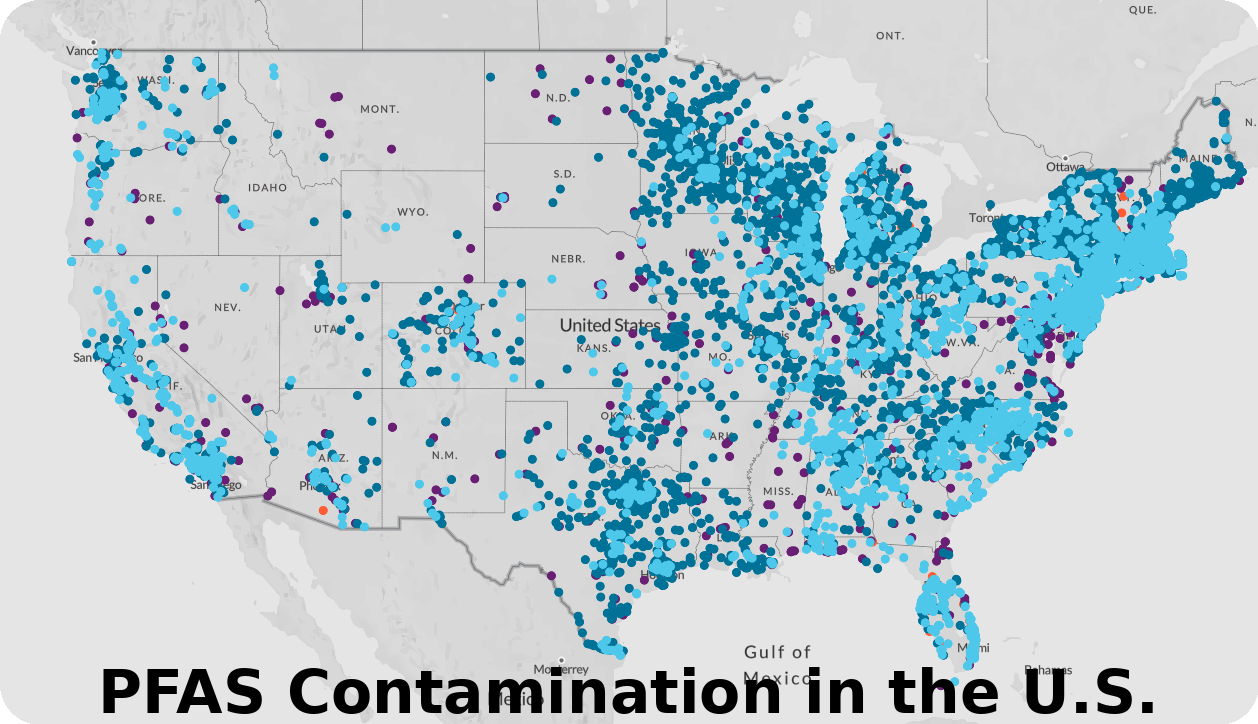
If you want to reduce PFAS in drinking water, the good news is that proven solutions exist. The challenge is knowing which systems are effective and which are not — because most standard filters were never designed to handle these contaminants. This guide covers the three methods that actually work, what certifications to look for, and how to choose the right system for your home.
What are PFAS and why people are paying attention
PFAS (per- and polyfluoroalkyl substances) are often called “forever chemicals” because they resist breaking down in the environment or in the human body. For decades they were used in products designed to resist heat, water, and oil — non-stick cookware, food packaging, stain-resistant textiles, and firefighting foam. Today, they are showing up more frequently in drinking water across the United States.
For most households, tap water is one of the most consistent potential sources of daily exposure.
Source: EPA — Reducing PFAS in Your Drinking Water with a Home Filter
Why PFAS have become a regulatory priority
What distinguishes PFAS from other contaminants is persistence. Unlike many chemicals that your body processes and eliminates quickly, PFAS can accumulate over time. Even low-level daily exposure becomes more significant when it compounds across months and years.
In 2024, the EPA finalized the first-ever national drinking water standards for PFAS — setting maximum contaminant levels for PFOA and PFOS at 4 parts per trillion. That is not a regulatory footnote; it reflects a scientific consensus that these chemicals warrant active management. For families who want confidence in their water, relying on utility compliance alone is increasingly not enough.
Source: EPA — Health and Environmental Risks from PFAS
Why PFAS are difficult to filter out of drinking water
PFAS were engineered to be chemically inert and stable — that stability is precisely what makes them a challenge to filter out. The carbon-fluorine bond is one of the strongest in organic chemistry. Most standard pitcher filters, basic faucet attachments, and sediment filters operate at a physical level that simply cannot capture dissolved PFAS molecules.
The type of filtration system you choose matters far more than the brand or price point. A $200 filter with the right technology will outperform a $500 system that was never designed to address PFAS.
Source: ITRC — PFAS Treatment Technologies
What actually works: the three proven methods
Three filtration technologies have been independently tested and verified to reduce PFAS in drinking water at home. Understanding how each works helps you match the solution to your household’s needs.
Reverse Osmosis (RO)
Pushes water through a semi-permeable membrane that blocks contaminants at a molecular level — including dissolved PFAS compounds. Effective for PFOA, PFOS, and many other contaminants simultaneously.
Most effective PFAS filtration technologyAdvanced Carbon Filtration
High-quality activated carbon filters — when certified and properly maintained — can adsorb PFAS. Not all carbon filters qualify; look specifically for NSF/ANSI 53 certification listing PFAS.
Certified NSF/ANSI 53Ion Exchange Resin
Certain ion exchange resins — particularly anion exchange — are effective at capturing PFAS. More commonly used in municipal treatment but available in some point-of-use systems.
Certified NSF/ANSI 53Source: EPA — Identifying Drinking Water Filters Certified to Reduce PFAS
Reverse osmosis: the most comprehensive option for reducing PFAS
Reverse osmosis is widely recognized as one of the most effective home methods to reduce PFAS in drinking water. RO membranes filter at 0.0001 microns — small enough to address not just PFAS but also heavy metals, nitrates, chlorine, and other contaminants in a single system. For households seeking the broadest protection, reverse osmosis offers coverage that no other technology matches in a residential setting.
Most under-sink RO systems include a storage tank so you always have filtered water available, and installation typically takes an hour or two without professional plumbing experience.
Source: EPA — PFAS Treatment Technologies
Advanced carbon filtration: the faster, simpler path
Activated carbon filters work by adsorption — PFAS molecules bind to the surface of the carbon media as water passes through. For this to work effectively, the carbon must have a high surface area and the system must be certified to NSF/ANSI 53 with PFAS explicitly listed in the certification documentation.
Carbon filtration is a practical choice for renters, those who want minimal installation, or households that prefer a filtered faucet to a full under-sink system. The trade-off is that carbon systems are typically limited to the contaminants they are specifically certified for, while RO reduces a broader range.
What to look for in a PFAS water filter
NSF certification: the non-negotiable starting point
The most important thing to verify before purchasing any PFAS water filter is independent certification. NSF International tests filtration systems against documented standards and verifies performance under real conditions. Without this, a manufacturer’s PFAS reduction claims cannot be independently verified.
| Standard | Applies to | What it certifies |
|---|---|---|
| NSF/ANSI 53 | Carbon filters, faucet filters | Reduction of specific health-effect contaminants including PFOA and PFOS when listed |
| NSF/ANSI 58 | Reverse osmosis systems | Reduction of TDS and specific contaminants including PFAS compounds |
Source: Penn State Extension — PFAS Home Water Treatment
Verify that PFOA and PFOS are explicitly listed
A system certified to NSF/ANSI 53 or 58 is not automatically certified to reduce PFAS. The certification must specifically include PFOA and PFOS in its contaminant reduction list. Always check the manufacturer’s documentation or the NSF product listing directly — not just the logo on the box.
- Look for NSF/ANSI 53 or 58 certification on the system
- Confirm PFOA reduction is listed in the certification documentation
- Confirm PFOS reduction is listed in the certification documentation
- Check that the system is still under its certified replacement filter schedule
- For RO systems, verify the membrane is included in the certification — not just the housing
A practical path to reducing PFAS at home
For most households, the most impactful and cost-effective approach is to start at the point of consumption — the water you drink and cook with. Whole-home PFAS filtration exists, but the expense and maintenance requirements are significant. A quality point-of-use system (under-sink or countertop) addresses the highest-priority exposure pathway first.
Which system is right for your household?
Highest Protection
EcoPure ECOP30 Reverse Osmosis System
3-stage reverse osmosis system that uses the most effective filtration technology available for PFAS reduction. Also certified to reduce lead, chlorine, arsenic, and more. Best choice for households that want the most comprehensive protection from drinking water contaminants.
View the ECOP30Simple Upgrade
EcoPure EPWPFF Carbon Filtration System
Certified faucet filtration system for straightforward installation. A faster path to filtered water for renters or households that prefer a simpler setup over a full RO installation.
View the EPWPFFFrequently asked questions about reducing PFAS in drinking water
What is the best way to reduce PFAS in drinking water at home?
Reverse osmosis is the most effective method. RO membranes filter at a molecular level and are widely recognized by the EPA as highly effective against PFOA and PFOS. When shopping, look for a system with NSF/ANSI 58 certification and confirm PFAS is explicitly listed in its contaminant reduction claims. Advanced carbon filtration certified to NSF/ANSI 53 is also effective and requires simpler installation.
Does a standard water filter reduce PFAS?
Most standard pitcher filters and basic faucet attachments are not designed to reduce PFAS. You need a filter specifically certified to NSF/ANSI 53 or 58 with PFOA and PFOS listed in the certification. Always verify the contaminant list — not just the NSF logo.
What does NSF/ANSI 58 certification mean for PFAS?
NSF/ANSI 58 is the standard for reverse osmosis systems. A system certified to this standard has been independently tested to reduce total dissolved solids and specific contaminants. For PFAS coverage, verify that PFOA and PFOS are explicitly listed in the certified contaminant reduction claims.
Does boiling water reduce PFAS?
No. Boiling water does not reduce PFAS. Because PFAS are not volatile at water’s boiling point, heating water will not cause them to evaporate. Boiling can actually concentrate PFAS slightly as some water evaporates. Certified filtration is the only effective home treatment.
How do I know if my tap water contains PFAS?
Your local water utility is required to test for PFAS and report results in its annual Consumer Confidence Report (CCR). You can also check the EWG Tap Water Database by ZIP code, or order a certified home water test that screens for PFAS compounds.